Sheet Pile Shoring Systems
Our sheet piling trench solution is a highly customizable option ideal for challenging ground conditions like loose soils, flowing soils and wet environments. United Rentals will design and engineer a unique sheet pile system for your jobsite requirements. We offer a wide range of steel sheet piling options, including hot-rolled and cold-rolled styles, sourced from trusted manufacturers.

A Reusable and Versatile Engineered Solution
Steel sheet piles interlock to form a continuous wall and are commonly used to retain soil or control groundwater in excavation and marine applications. By transferring pressure from the retained soil to the ground in front of the wall, sheet pile systems provide strong and reliable earth retention. After a project ends, the steel sheets can be extracted and reused for another project, which supports sustainability goals.
Hot-rolled sheet piles are manufactured from steel at high temperatures, resulting in a tighter, more precise interlock to support low permeability. Cold-rolled sheet piles offer a more cost-effective solution for many standard soil retention needs and perform similarly in most conditions.

Popular Sheet Pile Types
PZ 27
The PZ hot-rolled sheet pile is widely used and recognized by the ball and socket interlock. This interlock pattern allows up to 10 degrees of swing for any necessary turns in the excavation. The PZ 27 is our most popular PZ section that we use in our sheet piling designs.

PZC 18
The PZC 18 hot-rolled sheet pile provides a lighter and more cost-effective alternative, offering a 50-inch paired width compared to the 36-inch width of PZ 27, along with a higher section modulus. The PZC 18 is an efficient and reliable option for many temporary excavation applications.

SKS 16
The SKS 16 sheet pile offers a lightweight, cost-effective option with solid structural performance for temporary earth retention needs. Its efficient section properties make it a practical choice when project requirements call for reliable support without the heavier profile of larger sheet pile sections.

KDVI/8
The KDVI/8 sheet pile provides a compact, economical solution for temporary earth retention where lighter section properties are sufficient. Its streamlined profile makes it well suited for projects that require dependable support without the weight or cost of larger sheet pile sections.

Engineering and Setup Considerations
Our team recommends that you gather important information about your project and jobsite before we get started on your engineered solution. Site evaluations and bore logs give us the important information to understand your project's specific requirements.
Site Evaluation
Conduct a preliminary site evaluation and assess soil classification and ground conditions using OSHA standards. We will then determine if sheet piling would be best at your location.
Bore Logs
Assess the bearing capacity of the soil, lateral earth pressures and groundwater conditions, and send us your completed bore logs to help us get the lay of the land.
Installation and Removal
Our dedicated installation advisor will consult on how to install the RPE’s certified design for the sheet piling solution at your location. The advisor will ensure that you have the correct earthmoving equipment ready and available to start the excavation.
Industries We Serve
United Rentals provides sheet piling for excavation projects in a variety of industries.

Energy & Utility
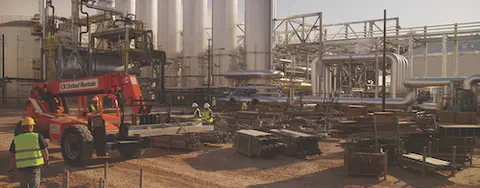
Oil & Gas Refining
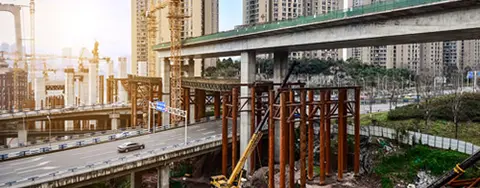
Civil & Infrastructure
Our Engineered Systems Team
At United Rentals, we back our engineered systems with the industry’s largest team of dedicated installation advisors and RPEs. Our branch teams maintain, assemble, and prepare every shoring system to meet project specifications, while our onsite advisors work directly with contractors to ensure safe and efficient installation in the field. Each advisor is equipped with hands-on knowledge of our full line of engineered solutions, ensuring that projects stay on schedule, crews remain safe and installations are completed to the highest standards.
Behind every project is our engineering department, staffed with RPEs licensed across the U.S. and Canada and ready to design customized, PE-stamped excavation plans for any site condition. What truly sets United Rentals apart is not only the size of our team, but the depth of experience, skill, and commitment our people bring to every project.


Resources
If you’d like to learn more about our equipment and experience, our Resources page includes additional client success stories, educational blog posts, guides, technical spec sheets and more.
Other Engineered Systems Services and Solutions
United Rentals offers additional engineered systems to support complex excavation projects, including hydraulic bracing equipment, beam and plate systems and slide rail systems.

Hydraulic Bracing Equipment
Our hydraulic bracing equipment provides an efficient and sustainable alternative to traditional bracing methods. Learn more about our mega brace and hydraulic strut systems.

Beam and Plate Systems
We offer engineered beam and plate systems that include vertical beams and steel plates to provide a sturdy, temporary wall around deep excavation projects.

Slide Rail Shoring Systems
We provide slide rail shoring systems with a patented open-track rail design and ground-level installation to keep crews out of the trench and clear of lifted loads during setup.
Sheet Piling FAQs
Sheet pile construction and excavation solutions are highly common trench engineered systems. They provide a helpful shoring option that can be easily supported by our hydraulic bracing equipment. Our engineers will look at your jobsite location, excavation needs and site evaluations to determine which engineered system is best for your project.
Learn more about steel sheet piling in our FAQ section below.
Sheet piles are aligned and driven into the ground using vibratory or impact hammers, forming a continuous interlocked wall. Depending on engineering requirements, internal walers or bracing may be added to support the excavation as it deepens. Once the permanent structure is completed and the excavation is backfilled, the bracing system is removed in reverse order, starting at the bottom and working upward. After all internal supports are cleared, the sheet piles are extracted, usually with a vibratory hammer to break soil friction, allowing the piles to be pulled up and reused.
Sheet pile excavation sheeting is best suited for retaining loose, cohesionless soils like sand and gravel, where their interlocking design provides reliable lateral support and groundwater control. Sheet piles are particularly effective in excavations where maintaining vertical faces, limiting ground movement and managing hydrostatic pressure are key design considerations. Their ability to create a continuous, low-permeability barrier makes them well-suited for applications involving elevated groundwater or hydraulic loading. While sheet piling is effective in many conditions, very dense or rocky ground can make installation challenging.
Sheet pile systems often require additional support when excavation depths, soil conditions or hydrostatic pressures exceed the free-standing capacity of the sheet pile wall. Most engineered excavations rely on bracing solutions or tie-back systems to control lateral movement and maintain wall stability. Depending on the excavation design, internal walers may be used to transfer loads uniformly along the sheet pile wall. In other cases, struts, hydraulic braces or tie-backs can be installed without the need for walers.
